

Faster Hot Water for Your Home
Have you ever turned on the hot water faucet and waited… and waited… and waited some more for hot water to arrive?
A hot water recirculation pump is designed to solve that problem.
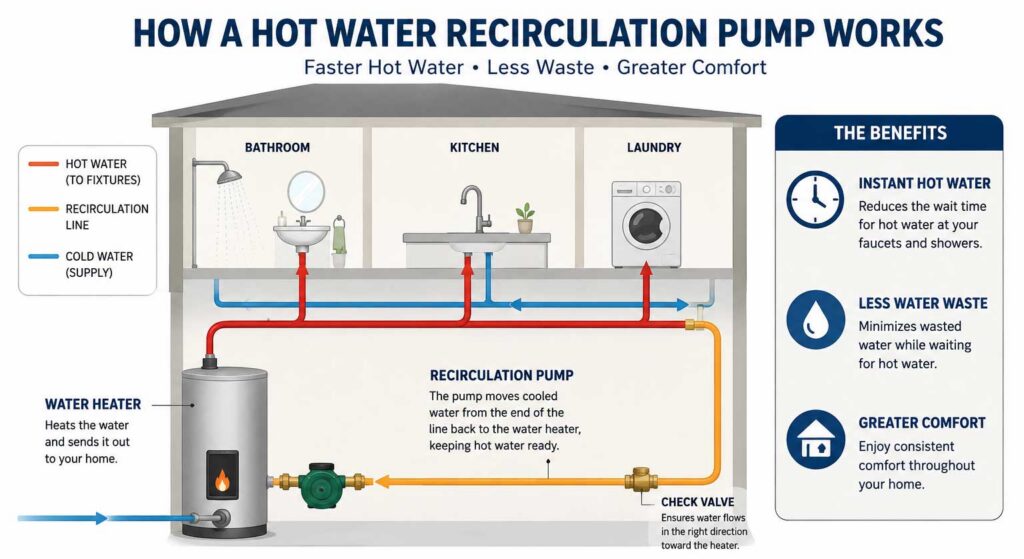
These systems keep hot water moving through your plumbing lines so it’s available much faster when you turn on the tap. Instead of letting cooled water sit in the pipes, the system continuously or periodically circulates hot water back to the water heater.
For homeowners tired of wasting time and water waiting for heat, a recirculation pump can be a major convenience upgrade.
How Does a Recirculation Pump Work?
Normally, when you turn off your hot water faucet, the hot water sitting in the pipes gradually cools down. The next time you need hot water, all that cooled water has to run out before hot water arrives from the water heater.
A recirculation pump changes that process by moving water through the plumbing system on a loop.
Depending on the setup, the pump may:
- Run continuously
- Operate on a timer
- Turn on based on water temperature
- Activate only during certain hours
- Use a motion sensor or push-button activation system
Some modern systems use smart controls or temperature sensors to circulate water only when needed, helping improve efficiency and reduce energy use. This helps reduce the wait time for hot water at sinks, showers, and tubs throughout the home.
Why Homeowners Choose Recirculation Pumps
Faster Hot Water
Less Water Waste
Added Comfort
Helpful for Large Homes
Frequently Asked Questions
In many homes, yes. A recirculation pump can often be added to an existing plumbing system without replacing the current water heater.
There are retrofit recirculation systems designed specifically for older homes, including systems that do not require a dedicated return line.
However, the best option depends on several factors, including:
- The age and condition of the water heater
- Your plumbing layout
- Your tankless unit is located far from bathrooms or kitchens
- The distance between fixtures and the water heater
- Whether your home already has a recirculation line installed
If the water heater is very old or nearing the end of its lifespan, some homeowners choose to upgrade both the water heater and recirculation system at the same time. But in many cases, a recirculation pump can be installed on its own.
A professional plumber can evaluate your existing setup and recommend the best solution for your home.
One small note: with tankless water heaters specifically, compatibility matters a little more. Some tankless units are designed for recirculation systems and some require additional components or settings adjustments.
Yes — recirculation pumps can work with tankless water heaters, and in many homes they can make a big difference in comfort and convenience.
One common misconception is that tankless water heaters provide instant hot water the moment you turn on the faucet. While tankless systems heat water on demand, they still cannot instantly move hot water through long plumbing lines.
If your bathroom, kitchen, or laundry room is located far from the tankless unit, you may still experience a delay while waiting for hot water to travel through the pipes.
A recirculation system helps solve that problem by keeping hot water moving through the plumbing system so it reaches fixtures faster when needed.
Not always. Smaller homes with short plumbing runs may already get reasonably fast hot water delivery.
However, a recirculation system may be worth considering if:
- Your home is large or spread out
- You wait a long time for hot water
- Your tankless unit is located far from bathrooms or kitchens
- You want to reduce water waste
- Convenience and comfort are priorities
Some newer tankless water heaters even include built-in recirculation features or are designed to work with external recirculation pumps.
Because tankless systems operate differently than traditional tank water heaters, it’s important to have the proper setup installed to ensure efficiency and performance.
Like any plumbing system, there are a few things to consider.
Some recirculation pumps can slightly increase energy usage because the water heater may need to work more often to maintain hot water in the lines. However, many modern systems include timers, smart controls, and energy-efficient settings to help reduce unnecessary operation.
Professional installation is also important to ensure the system works correctly and efficiently with your home’s plumbing layout.
Is a Recirculation Pump Right for Your Home?
A hot water recirculation pump may be a good option if:
- You frequently wait a long time for hot water
- Your home is large or spread out
- Your tankless unit is located far from bathrooms or kitchens
- You want to reduce water waste
- You’re remodeling a bathroom or replacing a water heater
- Convenience and comfort are priorities for your household
Every home is different, so the best setup depends on your plumbing system, water heater, and how your home is designed.
Need Help Deciding?
If you’re interested in faster hot water and improved convenience, our team can help you determine whether a recirculation system is a good fit for your home. We can evaluate your plumbing layout, explain your options, and recommend the right solution for your needs.
Contact us today to get more information.
