


7 Common Causes and When to Call a Plumber
Have you ever stepped into the shower expecting a refreshing start to your day, only to find that the water is barely trickling out? Or turned on the kitchen faucet and noticed it takes twice as long to fill a pot?
Low water pressure is more than just an inconvenience. Sometimes, it's caused by a simple issue like a partially closed valve or a clogged faucet aerator. Other times, it can be an early warning sign of a plumbing problem that needs attention.
At Quality Service Plumbing, we help homeowners throughout the Boise area identify and resolve plumbing issues, including problems that affect water pressure. Understanding what causes low water pressure can help you recognize when there's a simple solution and when it's time to call a professional.
Here are seven common causes of low water pressure, what to look for, and when to call a plumber.
1. A Clogged Faucet Aerator or Showerhead
If you've noticed low water pressure at just one faucet or shower, the problem may be right at the fixture.
Over time, minerals, sediment, and other debris can build up inside faucet aerators and showerheads. Mineral deposits are especially common in areas with hard water, and they can gradually restrict the flow of water.
What to look for:
- One faucet or shower has noticeably weaker water flow than others.
- Water sprays unevenly or in different directions.
- The problem develops gradually rather than happening all at once.
What you can do: Try cleaning the faucet aerator or showerhead. Many can be removed and soaked in a suitable descaling solution to help loosen mineral deposits. Follow the manufacturer's instructions, especially for specialty finishes.
If cleaning the fixture doesn't improve the flow, or several fixtures are affected, there may be another issue within the plumbing system.
2. A Partially Closed Water Valve
Your home's water supply passes through valves that control the flow of water into the plumbing system. If one of these valves is partially closed, it can restrict water flow throughout the house.
This can happen after plumbing work, repairs, or maintenance. Sometimes a valve simply wasn't fully reopened after the work was completed.
What to look for:
- Water pressure is low throughout the home.
- The problem started after plumbing repairs or work on the water supply.
- A main shutoff valve or water meter valve may not be fully open.
What you can do: If you're comfortable doing so, check whether your home's main water shutoff valve is fully open. Avoid forcing a stiff, corroded, or damaged valve, as it could break or begin leaking.
If the valve is fully open and the pressure is still low, a plumber can check the supply valves and other components to determine what's restricting the flow.
3. A Failing Pressure Regulator
Some homes have a pressure-reducing valve, also called a pressure regulator, that helps control incoming water pressure and keep it within an appropriate range for the home's plumbing system.
When a pressure regulator begins to fail, it may no longer maintain the proper pressure. Depending on the type of failure, water pressure can become too low, too high, or fluctuate.
What to look for:
- Water pressure has gradually decreased throughout the house.
- Pressure changes unexpectedly or fluctuates.
- Adjusting or cleaning individual fixtures doesn't solve the problem.
A plumber can test the home's water pressure with a gauge and determine whether the regulator is working properly.
A faulty regulator may need to be adjusted or replaced. Because water pressure that's too high can also damage plumbing fixtures and appliances, it's important to have the system checked rather than simply trying to increase the pressure yourself.
4. Mineral Buildup or Corrosion in Pipes
Your home's plumbing pipes carry water every day, but their condition can change over time.
Mineral deposits can accumulate inside pipes, while older metal pipes may develop corrosion. Both can restrict the space available for water to flow through, reducing the amount of water that reaches your fixtures.
This is more likely to be an issue in older plumbing systems, although mineral buildup can affect plumbing components in newer homes, too.
What to look for:
- Water pressure has gradually declined over months or years.
- Multiple faucets or fixtures have reduced flow.
- Older galvanized steel pipes are present in the home.
- Discolored water or other changes in water quality accompany the pressure problem.
If the restriction is inside the plumbing system, cleaning a faucet aerator won't solve the underlying issue. A plumber can inspect the pipes, evaluate the condition of the system, and determine whether a repair or pipe replacement is appropriate.
5. A Hidden Water Leak
A leak somewhere in your plumbing system can reduce the amount of water available to your fixtures. If a water line is damaged or leaking, you may notice a change in pressure, particularly if the leak is substantial.
Not every leak causes low water pressure, and small leaks may not affect pressure at all. However, a sudden change in water pressure combined with other warning signs is worth investigating.
What to look for:
- An unexplained increase in your water bill.
- Wet spots in the yard or unusually soggy areas of the lawn.
- Damp walls, ceilings, or flooring.
- The sound of running water when all faucets and water-using appliances are turned off.
If you suspect a leak, don't ignore it. Water leaks can cause property damage and may worsen over time.
If you can safely access your home's water meter, you can check whether it continues to register water use when everything is turned off. Keep in mind that appliances, irrigation systems, and other automatic water use can affect the reading.
If you suspect a hidden leak, a plumber can help locate the source and recommend the appropriate repair.
6. A Problem With the Municipal Water Supply
Sometimes, low water pressure has nothing to do with the plumbing inside your home.
Water pressure can be affected by work on municipal water lines, water main breaks, maintenance, or other issues with the public water supply. If several homes in your neighborhood are experiencing the same problem, the source may be outside your property.
What to look for:
- Neighbors are experiencing similar pressure problems.
- The pressure dropped suddenly.
- You recently received a notice about water system maintenance or construction.
Before scheduling a plumbing repair, check with your local water provider to see whether there is a known service issue in your area.
If the municipal supply is operating normally and your home continues to have low pressure, a plumber can investigate whether the issue is related to your service line, shutoff valves, or interior plumbing.
7. A Problem With Your Well or Private Water System
For homes that rely on a private well, low water pressure may be related to the well pump, pressure tank, pressure switch, or other parts of the water supply system.
A well system uses these components to deliver water and maintain pressure throughout the home. If one of them isn't working correctly, you may notice reduced flow or fluctuating pressure.
What to look for:
- Water pressure rises and falls while using water.
- Pressure is low at several fixtures.
- The well pump runs more frequently than usual or seems to run continuously.
- The problem started after a power outage or an issue with the well system.
Well systems have specialized components, so it's important to have the system evaluated by a qualified well or pump professional when the problem appears to be related to the well itself.
If the well is supplying water normally but pressure is low inside the house, a plumber may be able to help identify an issue with the home's plumbing or pressure equipment.
Quick guide to diagnosing low water pressure
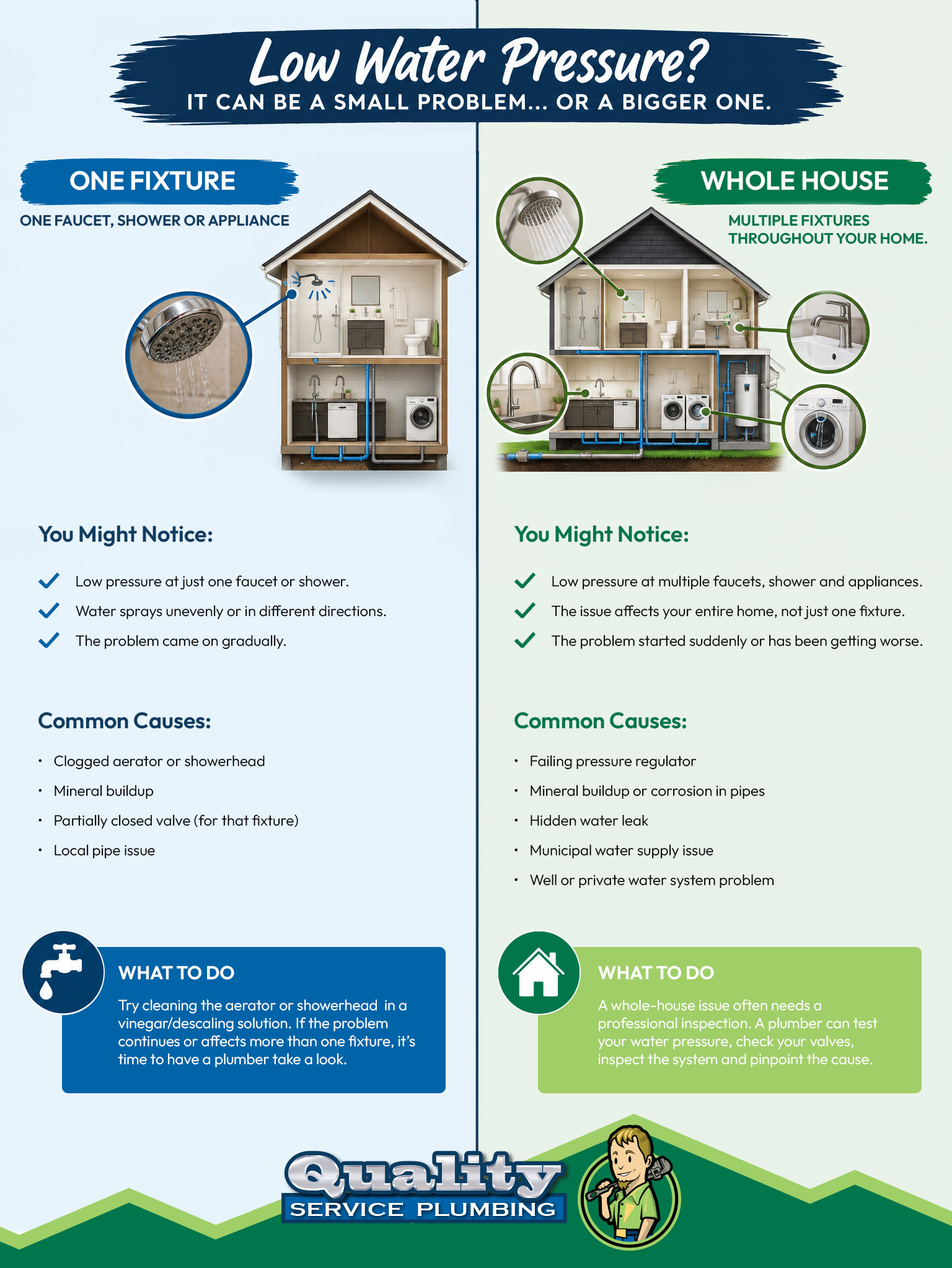
Not all low water pressure problems have the same cause. If you’re experiencing low water pressure in just one faucet or shower, the problem may be limited to that fixture. A clogged aerator, showerhead, faulty fixture, or local supply line can restrict water flow in one location. But when low water pressure affects multiple fixtures throughout your home, it may point to a larger plumbing or water supply issue.
Use this graphic as a quick reference to help narrow down where your water pressure problem may be coming from. Save or screenshot it so you can easily refer back to it the next time you notice weak water flow. If low water pressure is affecting your entire home or you can't determine what's causing the problem, contact Quality Service Plumbing. Our experienced plumbers can help identify the source of the problem and recommend the appropriate solution.
When Should You Call a Plumber for Low Water Pressure?
Many of these problems start as small leaks before becoming major plumbing emergencies, which is why it's important to address plumbing issues early.
Not every drop in water pressure requires a service call. If a single faucet has weak flow, cleaning the aerator may be all that's needed.
However, there are situations when it's worth having a professional take a closer look.
Consider calling a plumber if:
- Your entire home suddenly loses water pressure. A sudden, widespread change may indicate a problem with the main water supply, a valve, a leak, or another major plumbing component.
- Water pressure keeps getting worse. Gradual changes can point to mineral buildup, corrosion, or a failing pressure regulator.
- You suspect a water leak. Wet spots, unexplained water bills, or the sound of running water deserve attention.
- Your water pressure fluctuates frequently. Inconsistent pressure can be a sign of a regulator or supply-system problem.
- Simple troubleshooting hasn't helped. If cleaning a fixture or checking an accessible valve doesn't resolve the issue, further diagnosis may be needed.
If you have a major leak, water coming into your home, or a sudden loss of water accompanied by other signs of a serious plumbing problem, contact a plumber promptly. If you can safely shut off the home's main water supply without approaching standing water or electrical hazards, doing so may help limit damage.
Get to the Source of Your Water Pressure Problem
Low water pressure can be frustrating, but it can also give you an important clue about the condition of your home's plumbing.
The key is figuring out whether the issue is isolated to one fixture, affects the entire house, or is coming from the water supply itself. That information can help narrow down the cause and prevent unnecessary repairs.
At Quality Service Plumbing, we believe in finding the source of the problem and explaining your options so you can make an informed decision about your home.
If you're dealing with low water pressure in Boise, Meridian, or the surrounding Treasure Valley, our team can help diagnose the issue and recommend the appropriate next steps.
Contact our team to schedule a plumbing evaluation and get your water flowing the way it should.
