
Supply Lines, Drains, Vents, Fixtures & More
When you turn on a faucet or flush a toilet, your home's plumbing system goes to work behind the scenes. Most homeowners don't think much about it—until something stops working.
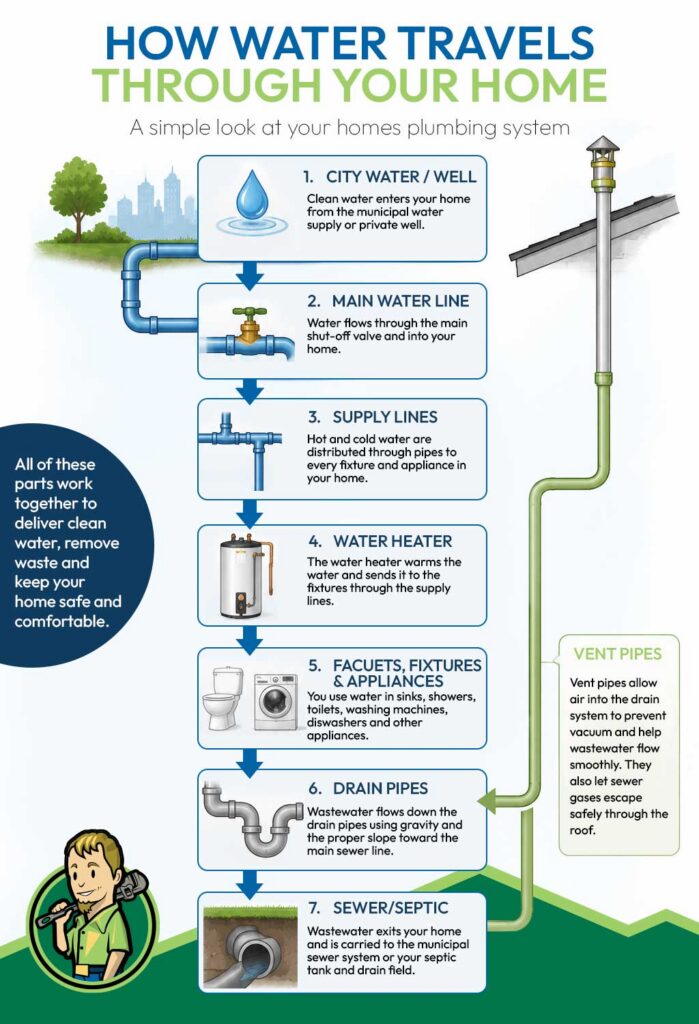
Your plumbing system is actually made up of several different components that all work together to deliver clean water, remove wastewater, and keep your home safe and sanitary. Understanding the basics can help you recognize potential problems early and know when it's time to call a professional.
Let's take a look at the main parts of your home's plumbing system.
1. Water Supply Lines
The water supply system is responsible for bringing fresh, clean water into your home.
Water enters your home from either a municipal water supply or a private well. From there, it travels through a network of pipes that distribute water to every plumbing fixture in the house.
Supply lines provide water to:
- Kitchen sinks
- Bathroom sinks
- Showers and tubs
- Toilets
- Washing machines
- Dishwashers
- Refrigerators with ice makers or water dispensers
- Outdoor hose bibs
Because these pipes are constantly under pressure, even a small leak can waste a significant amount of water and potentially cause expensive damage to your home.
2. The Drainage System
Once you've used the water, it has to go somewhere.
The drainage system carries wastewater away from your sinks, showers, tubs, toilets, and appliances. Unlike your supply lines, drain pipes aren't pressurized. Instead, they rely on gravity and proper pipe slope to move wastewater safely toward your sewer or septic system.
Common drainage problems include:
- Slow drains
- Clogs
- Sewer backups
- Broken or damaged drain pipes
- Tree root intrusion into sewer lines
If multiple drains in your home begin backing up at the same time, it could indicate a problem with your main sewer line rather than an individual fixture.
3. Plumbing Vent Pipes
Many homeowners have never heard of plumbing vents, but they're one of the most important parts of the entire system.
Vent pipes extend through your roof and allow air to enter the drainage system. This airflow prevents vacuums from forming inside the pipes, allowing wastewater to drain smoothly.
Vents also allow sewer gases to safely escape outside instead of entering your home.
Signs of a vent problem can include:
- Slow draining fixtures
- Gurgling sounds in sinks or toilets
- Sewer odors inside the home
4. Pipes & Fittings
Pipes are the highways of your plumbing system, while fittings connect everything together.
Depending on the age of your home, your plumbing may include materials such as:
- Copper
- PEX
- CPVC
- ABS
- PVC
- Galvanized
Each material serves a specific purpose and has its own advantages. During remodeling projects or plumbing repairs, it's important to use the correct materials and fittings to ensure a safe, reliable system.
5. Plumbing Fixtures
Fixtures are the plumbing components you use every day.
These include:
- Sinks
- Faucets
- Toilets
- Showers
- Bathtubs
- Garbage disposals
Because fixtures experience daily wear and tear, they're often the first place homeowners notice plumbing problems like leaks, low water pressure, or poor drainage.
Sometimes replacing an outdated fixture can improve both water efficiency and the appearance of your home.
6. Plumbing Appliances
Many people are surprised to learn that plumbing appliances aren't always repaired by plumbers.
Plumbing appliances include:
- Water heaters
- Tankless water heaters
- Dishwashers
- Washing machines
- Refrigerators with water or ice dispensers
- Water softeners
- Reverse osmosis systems
At Quality Service Plumbing, we install, replace, and connect plumbing appliances to your home's plumbing system. For example, we can install a new dishwasher, connect a refrigerator water line, replace a water heater, or install a water softener.
However, if a dishwasher or washing machine has an internal mechanical or electrical problem, that repair is typically handled by an appliance repair technician rather than a plumber.
This is one of the most common questions we receive, and understanding the difference can save you time when scheduling service.
Keeping Your Plumbing System Healthy
Just like your heating and cooling system, your plumbing benefits from routine care. A few simple habits can help prevent expensive repairs:
- Avoid pouring grease down the drain
- Only flush toilet paper—never wipes, paper towels, or hygiene products.
- Fix small leaks before they become bigger problems.
- Schedule water heater maintenance.
- Address slow drains before they become complete blockages.
- Have unusual noises, odors, or water pressure issues inspected promptly.
We're Here to Help
Your home's plumbing system is made up of many interconnected parts. When everything is working properly, it's easy to take it for granted. But when one component fails, it can affect your entire home's comfort and functionality.
Whether you need leak repairs, drain cleaning, water heater installation, fixture replacement, new plumbing for a remodel, or plumbing connections for a new appliance, the experienced team at Quality Service Plumbing is here to help.
If you're experiencing a plumbing issue or simply have questions about your home's plumbing system, give us a call. We're always happy to help homeowners throughout the Treasure Valley understand and care for their plumbing.
